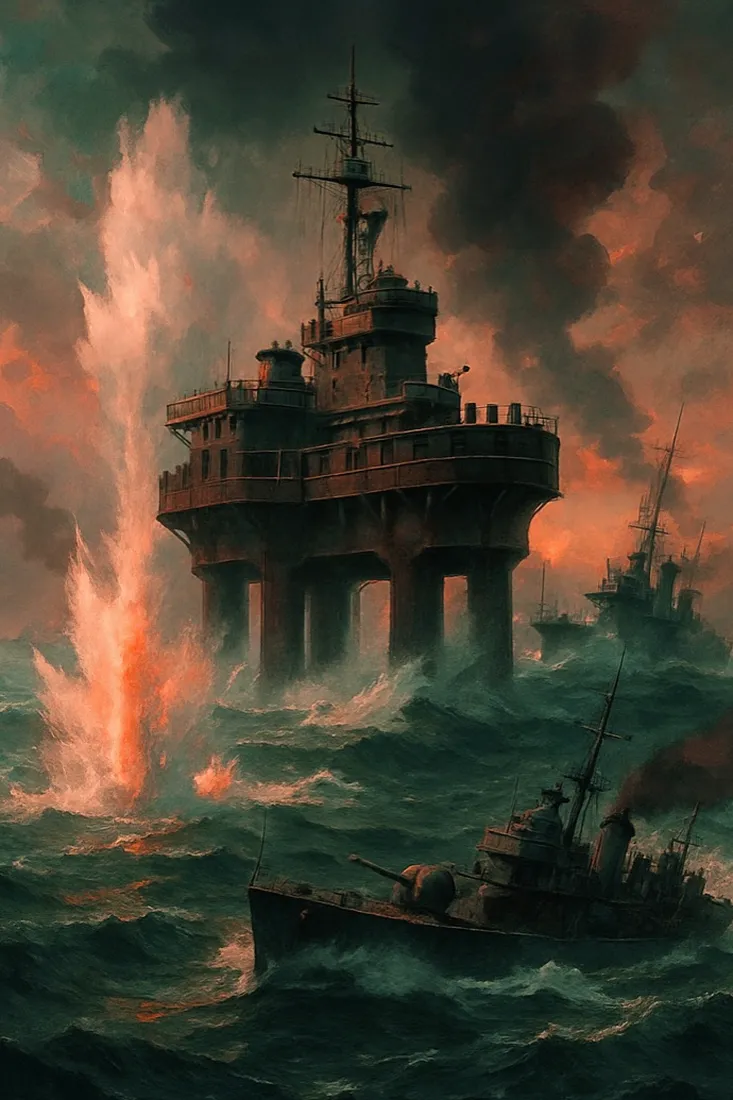
Seafight is the odd one out on this list, and that is precisely its appeal. There is no city to manage and no overnight build queue to plan. You are a captain with a ship, a hold and a cannon deck, sailing in real time across a world shared with other players. The official site pitches it as a real-time fantasy adventure, and that is a fair summary of how it feels in practice.
Bigpoint’s design centres on your vessel as home, fortress and progression system all at once. You stock it with supplies, upgrade it into something sturdier and take it into fights against both computer-controlled threats and other captains. The rhythm is closer to an action game than to the strategy titles around it: you sit down, you sail, you fight, you come home with a story.
Learning the helm and the ammunition locker
The first sessions teach movement, targeting and the importance of ammunition. Seafight offers several ammunition types with different effects, and choosing the right one for the target is a big part of skilful play. It gives fights a pleasant layer of decision-making: you are not just clicking at an enemy, you are deciding how to hurt it most efficiently while keeping your own hull in one piece.
Quests guide you through the early waters and award experience that unlocks further equipment. The learning curve is friendly for the first evenings. It sharpens once you leave the safer areas, where other players and tougher monsters appear, and that is when the importance of upgrades, supplies and caution becomes very clear.
Hunting the giants beneath the waves
Giant sea monsters are Seafight’s signature. The publisher warns that they lurk in treacherous waters, and they are the best reason to play: big, readable fights where positioning and ammunition choice matter. Taking one down with a guildmate or two is the most satisfying moment the game offers, and it feels pleasingly different from the menu-driven combat of the island games.
Monsters are also the bridge between sessions. They supply experience and loot, which feed upgrades, which let you hunt bigger monsters. It is a simple loop, but a sturdy one. On a cold evening it is easy to understand why some captains have been sailing these waters for years, chasing the next ship improvement.
Other captains and the price of carelessness
Seafight is openly a game of cutthroat seas. Other players can attack your ship, capture vessels and take booty, and PvP plays a central role. This is where the free experience gets harder. Well-equipped veterans are a genuine threat to newcomers who wander too far, and the gap between a fresh ship and a heavily upgraded one is wide.
Sensible captains learn to read the map, avoid risky waters until their ship can take a beating and sail with company. That caution is part of the drama, and some players love it for exactly that reason. Others will find the pressure tiresome. Know which kind of player you are before you commit many evenings.
Guilds, solo sailing and premium supplies
Guilds let you team up with friends for safer travel and bigger hunts, and they are the easiest way to make the game more welcoming. Solo play is possible and the site explicitly allows for captains who prefer to fight alone, but it is noticeably tougher. A guild with active members in North American hours makes a real difference.
Seafight is free to start and free to keep playing, with premium currency available for equipment and supplies. In a real-time combat game, purchased gear inevitably shows up in fights more directly than a speed-up does in a city builder. That is the main reason its fairness score sits lower than the others; the sailing itself remains enjoyable without spending.
Seafight: the first week afloat
- Complete the early quests in sheltered waters to learn movement, targeting and ammunition choices.
- Spend first earnings on hull and defence upgrades before buying bigger guns.
- Hunt smaller monsters repeatedly to build experience without risking much.
- Find a guild with members online during your evenings and sail together whenever possible.
- Keep an eye on the map and turn for safe waters at the first sign of a stronger rival.
What we love
- Real-time sailing and combat give it a hands-on feel the other games lack.
- Sea monster hunts are big, readable and genuinely exciting.
- Ammunition choices add a tactical layer to every fight.
- No overnight timers to babysit between sessions.
What grates
- Open PvP can be punishing for new or lightly equipped ships.
- Purchased equipment matters more in fights than shortcuts do elsewhere.
- Progress slows sharply once early quests and easy monsters are behind you.
The captain Seafight suits
Captains who want to steer, aim and react rather than plan in advance. If you enjoy action games, can handle the occasional ambush with good humour and like the idea of hunting sea monsters with friends on a Friday night, Seafight is the liveliest crossing on our chart.
Seafight, weighed at the quay
Seafight is the most immediate and atmospheric game we reviewed, with real sailing, real-time fights and sea monsters worth the voyage. It is also the least forgiving to a free newcomer, because open PvP and purchased gear can tilt fights. Sail carefully, join a guild and treat it as an action game for a few evenings a week, and it delivers plenty of salt and smoke.